
As an international student, you maintain multiple online profiles for personal and academic communication. However, are you utilising these platforms for professional networking? With rapid technological advancements, employers increasingly rely on social media to identify and evaluate prospective candidates.
Rather than awaiting outreach from recruiters or hiring managers, you can proactively optimise your digital presence to distinguish yourself in a competitive labour market. The following strategies outline how to achieve this.
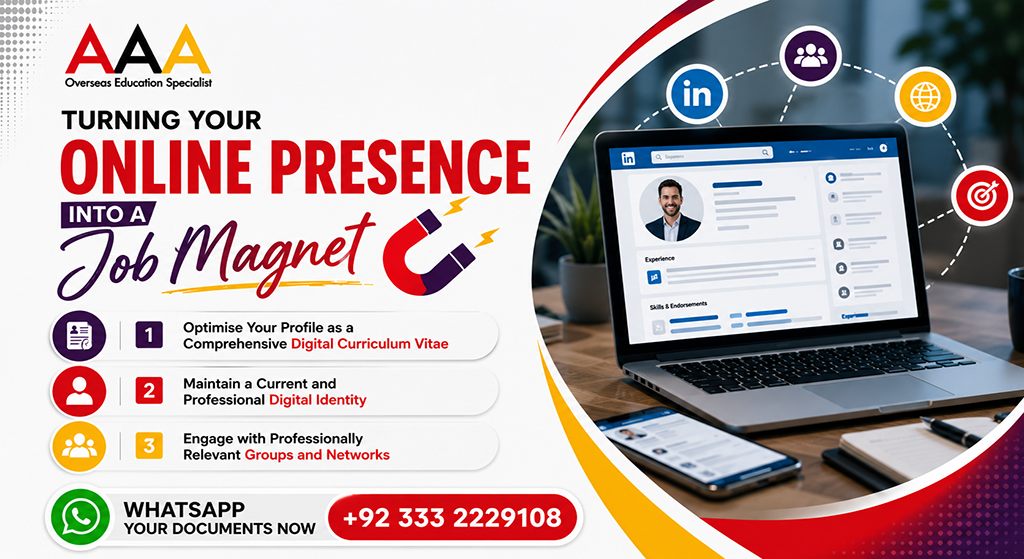
1. Optimise Your Profile as a Comprehensive Digital Curriculum Vitae
Constructing a robust social media profile mirrors the process of drafting a traditional résumé, albeit in an online format. When populating your profile, ensure that you thoroughly document your educational background, employment history, and competencies relevant to your target profession.
It is also advisable to highlight significant achievements and list any professional organisations or societies with which you are currently affiliated. To increase the frequency of job opportunity alerts, include a valid email address on your profile and explicitly indicate your job-seeking status, thereby enabling recruiters to contact you directly.
2. Maintain a Current and Professional Digital Identity
Your profile photograph constitutes the initial visual impression visitors form of your page. To establish a credible online presence, select a professional headshot. While formal business attire is not mandatory, the image should be clear, well-composed, and appropriate for a professional context. Avoid group photographs, casual selfies, or distracting backgrounds.
Regularly review and update your profile information, particularly when you assume a new role within an organisation, complete a certification, or begin a new academic programme. Outdated information may convey neglect or disinterest.
Furthermore, conduct a periodic audit of your entire digital footprint. Remove any photographs, comments, or shared content that could be perceived as unprofessional. A prudent guideline is to delete any material you would be unwilling to present to a potential employer.
3. Engage with Professionally Relevant Groups and Networks
Social media platforms host numerous professional groups and communities tailored to specific industries, including technology, finance, healthcare, marketing, and engineering. Joining these groups enables you to remain current with sector trends, forge connections with like-minded professionals, and expand your network strategically.
Make it a standard practice to follow organisations and discussion forums aligned with your career aspirations. Additionally, actively connect with your peers, professors, alumni, and former colleagues who share similar professional interests. Such engagement signals to recruiters that you are deeply invested in a particular field or industry, thereby enhancing your visibility and appeal.